

EPR for Waste Tyres Registration in India: A Complete Guide for Producers and Importers
Every year, millions of tyres become old and unusable in India. These tyres are called waste tyres. If they are thrown away carelessly or burned in open areas, they can cause serious damage to the environment. Waste tyres take many years to break down, create land pollution, increase the risk of fire, and release harmful gases into the air.
To solve this growing problem, the Government of India introduced EPR for waste tyres registration. This rule makes producers and importers responsible for collecting and recycling the waste tyres generated from the products they sell.
If you manufacture tyres, import tyres, or sell tyres under your own brand, understanding EPR is very important.
What is EPR for Waste Tyres?
EPR stands for Extended Producer Responsibility. It is an environmental policy that makes producers responsible not only for selling their products but also for managing the waste created after the products are used.
Under EPR for waste tyres registration, tyre producers and importers must ensure that an equivalent quantity of waste tyres is collected and recycled through authorized recyclers. This helps reduce pollution and encourages recycling instead of dumping waste into landfills.
The main purpose of EPR is to build a cleaner environment while promoting the responsible use of natural resources.
Why Was This Rule Introduced?
India generates a huge number of waste tyres every year because of the increasing number of cars, bikes, trucks, buses, and other vehicles on the roads.
Without proper recycling, waste tyres can:
Pollute the soil and water.
Release toxic smoke when burned.
Occupy large landfill areas.
Become breeding grounds for mosquitoes and pests.
Waste valuable materials that can be recycled.
The EPR system encourages businesses to become part of the solution instead of leaving the responsibility only to the government.
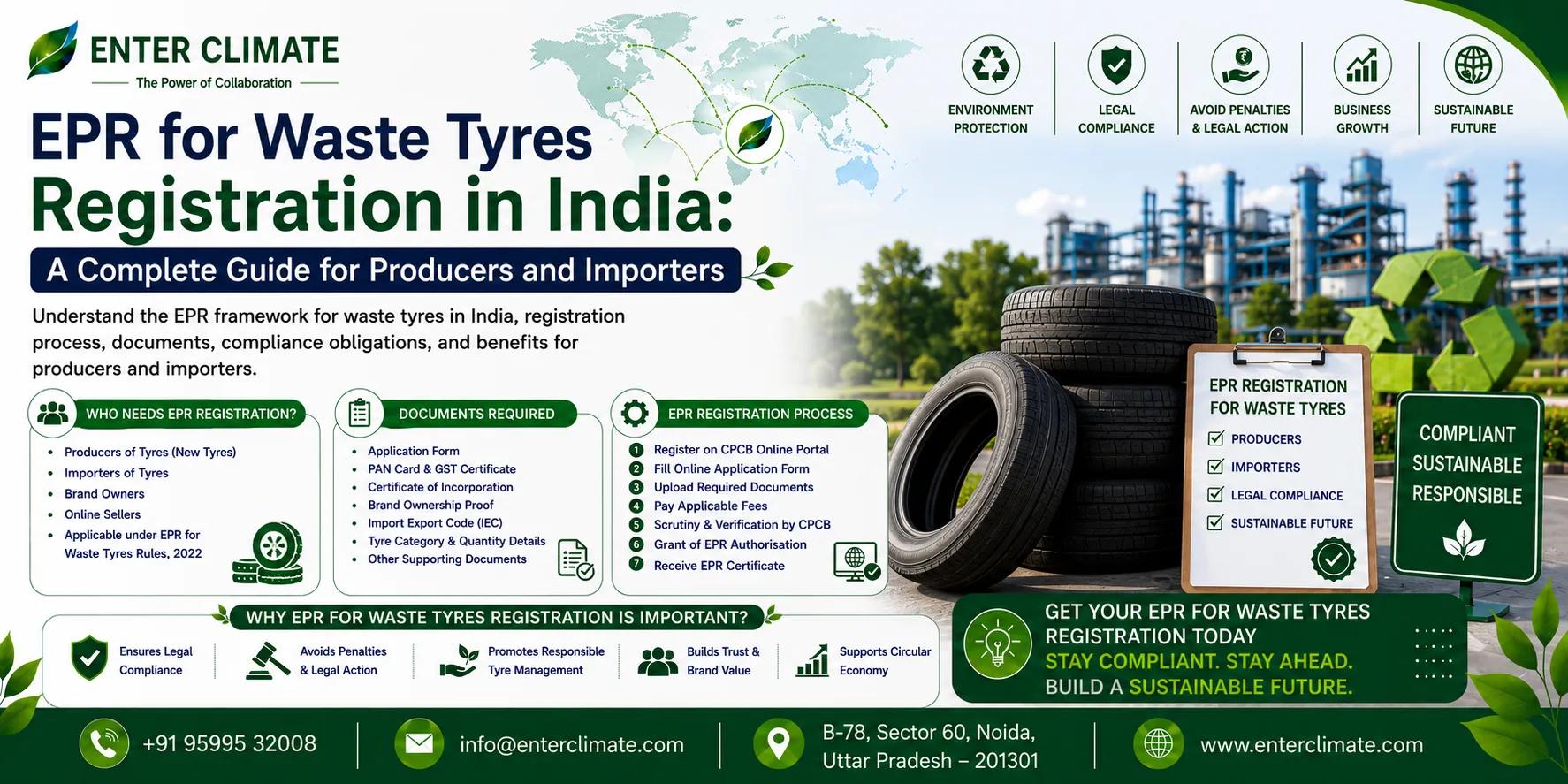
Who Needs EPR for Waste Tyres Registration?
Many businesses are covered under this regulation. You may need EPR for waste tyres registration if you are:
A tyre manufacturer.
A tyre importer.
An importer of vehicles fitted with tyres.
A brand owner selling tyres under your own brand.
A business introducing tyres into the Indian market.
If your company places tyres on the market, it is important to understand your responsibilities under the EPR framework.
Benefits of EPR Authorisation
Obtaining EPR Authorisation is not just about following the law. It also offers many advantages for businesses.
Some important benefits include:
Compliance with environmental regulations.
Improved brand reputation.
Better customer trust.
Support for sustainable business practices.
Reduced environmental pollution.
Better waste management planning.
Contribution to India's circular economy.
Many customers today prefer companies that care about environmental protection. Following EPR rules also shows that your business is committed to responsible growth.
How Does the Registration Process Work?
Although the process may seem difficult at first, it becomes much easier when you understand each step.
Step 1: Prepare Business Documents
Before applying, collect all the necessary documents such as:
Company registration certificate
GST registration
PAN card
Import or manufacturing details
Business address proof
Contact information
Keeping these documents ready helps speed up the application process.
Step 2: Submit the Application
Businesses must submit their application with the required documents through the appropriate government system. The information should be accurate and complete to avoid delays.
Step 3: Receive EPR Authorisation
After successful verification, eligible businesses receive EPR Authorisation, allowing them to comply with the waste tyre management rules.
This authorisation also brings responsibilities that continue even after registration.
Step 4: Meet Recycling Targets
Receiving registration is only the beginning.
Businesses must ensure that waste tyres equal to their assigned targets are collected and recycled through authorized recyclers. Meeting these recycling targets is one of the most important parts of EPR compliance.
Step 5: Maintain Proper Records
Every recycling activity should be properly documented.
Maintain records of:
Quantity of tyres sold
Quantity of waste tyres recycled
Recycling certificates
Compliance documents
Good record-keeping makes future reporting much easier.
What is PRO Authorisation?
Managing waste collection and recycling can be difficult for many businesses, especially those operating across different states.
This is where PRO Authorisation becomes helpful.
A Producer Responsibility Organization (PRO) works on behalf of producers and importers to help them meet their environmental obligations.
A PRO can help businesses by:
Organizing waste tyre collection.
Working with authorized recyclers.
Managing compliance records.
Supporting recycling target fulfillment.
Assisting with documentation.
Helping prepare compliance reports.
Working with an authorized PRO saves time and allows businesses to focus on their core operations while staying compliant with environmental regulations.
Importance of the EPR Post Compliance Report
Registration alone is not enough.
Businesses are also required to submit an EPR Post Compliance Report. This report shows that the company has fulfilled its recycling responsibilities and achieved its assigned targets.
The report generally includes:
Details of tyres placed in the market.
Quantity of waste tyres recycled.
Supporting recycling certificates.
Compliance information.
Submitting the EPR Post Compliance Report on time helps businesses maintain compliance and avoid unnecessary legal complications.
Common Mistakes Businesses Should Avoid
Many companies experience delays because of avoidable mistakes.
Some common errors include:
Applying with incomplete documents.
Providing incorrect business information.
Missing recycling targets.
Not maintaining proper records.
Delaying compliance reporting.
Working with unauthorized recyclers.
Forgetting to submit the EPR Post Compliance Report.
Planning ahead and maintaining proper documentation can prevent these issues.
How Enterclimate Helps Businesses
Environmental compliance can sometimes feel confusing, especially for businesses applying for the first time.
Enterclimate provides complete support for companies looking to obtain EPR Authorisation and EPR for waste tyres registration. The experienced team also assists businesses with PRO Authorisation, recycling target management, documentation, and preparation of the EPR Post Compliance Report.
From registration to ongoing compliance, Enterclimate helps businesses understand every step in a simple and professional manner. Their experts work with manufacturers, importers, and brand owners across India to simplify environmental compliance and reduce paperwork.
Conclusion
Waste tyre management is becoming increasingly important as India moves toward a cleaner and more sustainable future. Every producer and importer has an important role in protecting the environment.
Obtaining EPR for waste tyres registration is not only a legal responsibility but also a commitment to responsible business practices. By securing EPR Authorisation, working with organizations having PRO Authorisation, and submitting the EPR Post Compliance Report on time, businesses can stay compliant while supporting environmental conservation.
Following the EPR framework today helps build a healthier environment for future generations. Responsible businesses not only meet government regulations but also earn the trust of customers by contributing to a cleaner and greener India.
Author Profile
Upendra Sharma is an Environmental Compliance Consultant at Enterclimate, where he helps businesses across India understand environmental regulations and obtain approvals related to EPR, pollution control, waste management, and sustainability compliance. He regularly writes practical, easy-to-understand articles that simplify complex environmental laws for manufacturers, importers, startups, and business owners. His goal is to help companies achieve compliance smoothly while promoting responsible environmental practices.